Caveat (2020), directed by Damian McCarthy, is a slow-burning psychological horror film that thrives on atmosphere and eerie ambiguity. Instead of relying on traditional horror tropes like excessive gore or relentless jump scares, it builds tension through a claustrophobic setting, eerie sound design, and an ever-present sense of dread. The story follows Isaac (Jonathan French), a drifter suffering from memory loss, who is offered a seemingly simple job: to watch over Olga (Leila Sykes), a psychologically unstable young woman, in a decaying and isolated house. However, the job comes with a disturbing condition—Isaac must wear a locked leather harness that restricts his movement within the house, a rule imposed under the guise of ensuring Olga’s safety. This restriction immediately introduces a sense of helplessness, making him feel like a prisoner rather than a caretaker, and setting the stage for a nightmarish ordeal.
Now let me just pause this review a moment to say that would be a huge “HELL NO” moment for me. Are you kidding me? A week locked in a jacket??? My mind would have immediately gone to every worst case scenario: What if this guy was a psycho (which he was)? What if there’s a fire? What happens if I have an itch or need to shower? Okay, back to the plot…
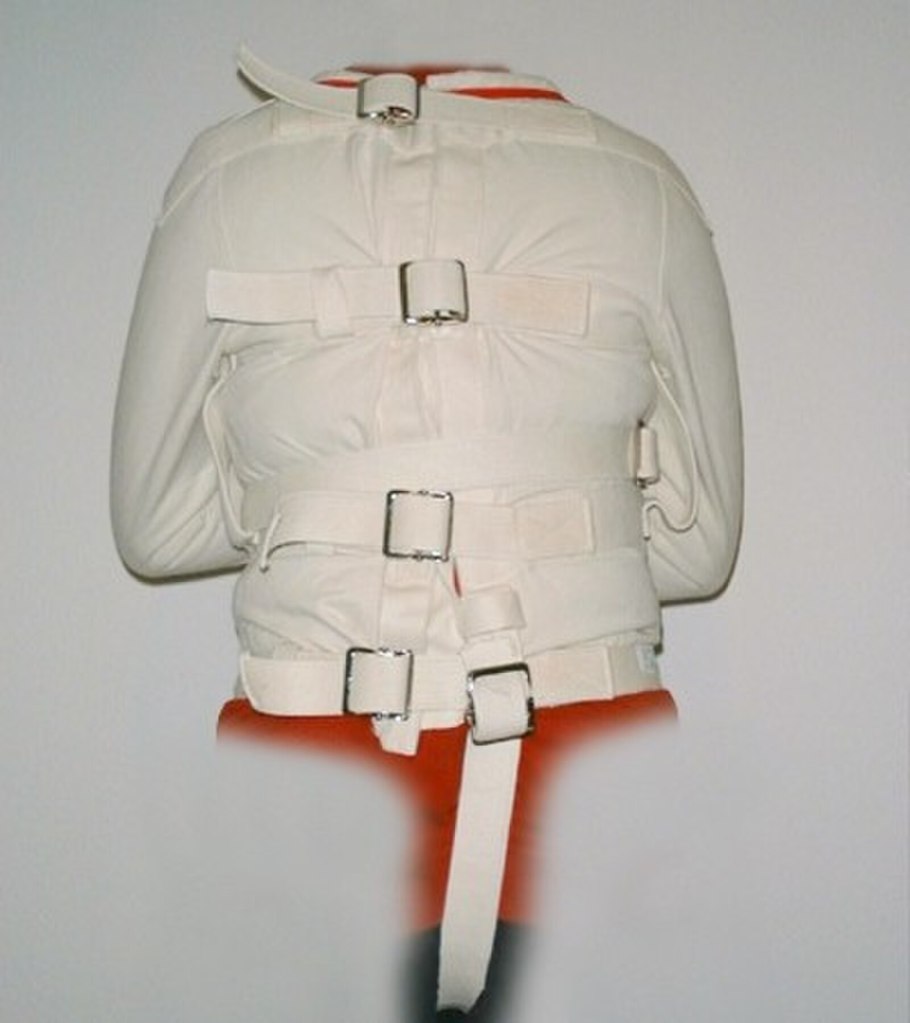
Photo by Klaus with K from Wikimedia.com
As Isaac begins to explore the house, he quickly realizes that something is deeply wrong. The environment itself exudes an almost tangible unease—its narrow hallways, peeling walls, and dim lighting make every shadow seem alive with sinister intent. Olga’s erratic behavior only amplifies the tension; she seems to drift between lucidity and paranoia, clutching an eerie, animated rabbit toy that appears to have a life of its own. As the film progresses, the lines between reality and delusion blur, with Isaac struggling to piece together not just his own past but also the dark secrets hidden within the house. The deeper he digs, the more he begins to suspect that his employment was never meant to be temporary—and that he may not be alone in the house.
What makes Caveat particularly unsettling is its refusal to offer clear explanations. The film doesn’t rely on excessive exposition, instead allowing the dread to build organically as Isaac’s circumstances grow more dire. The slow pacing forces the audience to sit with the discomfort, making each eerie moment stretch unbearably long, heightening the psychological horror. Every sound—a distant creak, the soft tap of the rabbit drum, the whisper of movement just out of sight—adds to the overwhelming sense of paranoia. Isaac’s own unreliable memory makes him an uncertain narrator of his own experience, making the audience question what is real and what might be a product of his fractured mind.
As the film unravels, it becomes clear that Caveat is not just about supernatural horror but also about psychological entrapment, trauma, and the consequences of the past. The harness serves as more than just a physical restraint—it symbolizes Isaac’s vulnerability and lack of control, a nightmarish metaphor for being trapped in a situation beyond his comprehension. This blend of psychological and supernatural horror makes the film feel both intimate and deeply unsettling, ensuring that its eerie imagery lingers long after the credits roll.

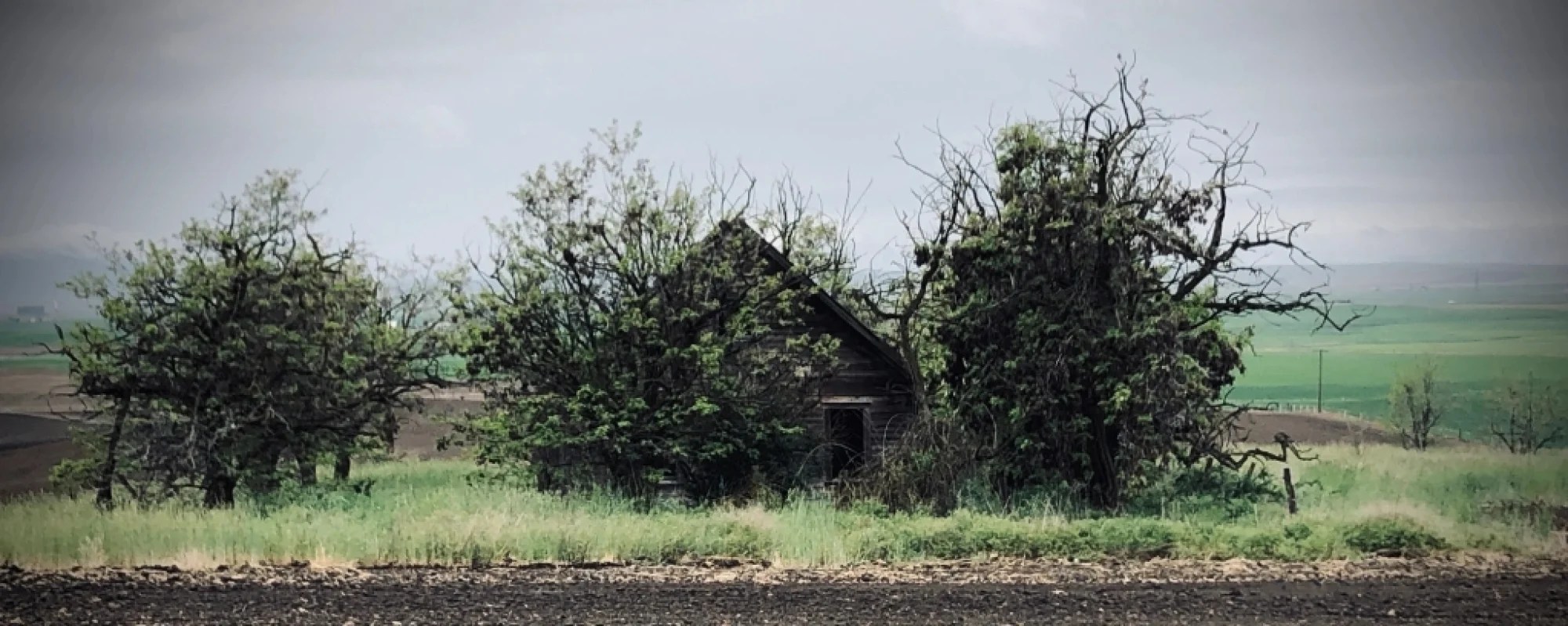
What makes Caveat particularly effective is its masterful use of atmosphere, which plays a more significant role in generating fear than any overt horror elements. The film’s cinematography leans heavily into dim, natural lighting that casts long shadows across the crumbling walls of the isolated house, creating an almost dreamlike sense of entrapment. Every room, corridor, and object seems to carry a heavy, unsettling presence, as if the house itself is watching. The confined spaces, peeling wallpaper, and water-stained ceilings make it feel like time has stopped inside this decaying home, trapping both Isaac and the audience in its oppressive stillness. McCarthy utilizes the setting as a character in itself, one that suffocates and disorients, making even the most mundane details—an empty chair, an open doorway, a flickering light—drip with sinister intent.
The film’s sound design is equally instrumental in building its sense of dread. Rather than an intrusive score guiding the audience’s emotions, Caveat employs an unsettlingly quiet soundscape, where every minor sound—a soft rustling, a distant creak, a faint breath—feels deafening in the stillness. Silence is used as a weapon, forcing the audience to focus on the subtlest shifts in the environment, heightening the tension to near-unbearable levels. The moments of noise, when they do arrive, are all the more effective because of this contrast. Whether it’s the clinking of Isaac’s restrictive harness or the eerie, rhythmic drumming of a wind-up rabbit toy, each sound feels meticulously placed to burrow under the skin and evoke an instinctual fear.
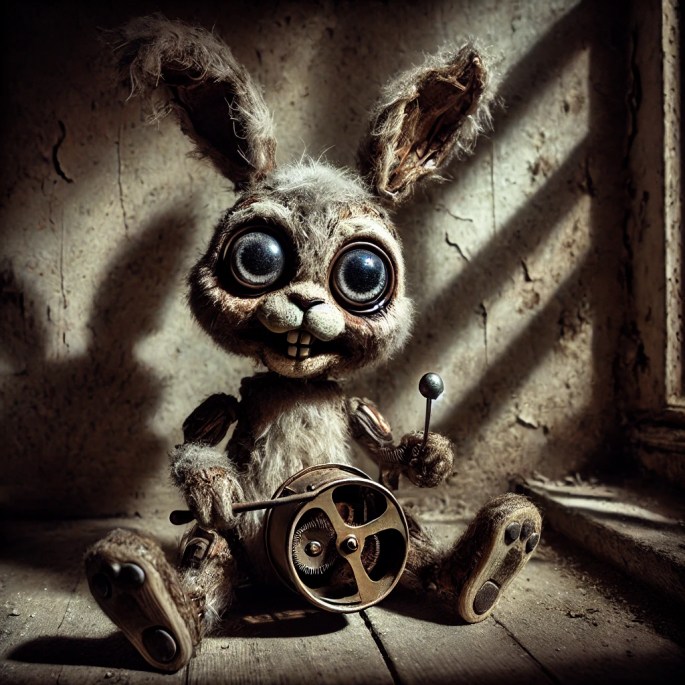
One of the film’s most terrifying and memorable elements is that very rabbit toy, which plays a crucial role in heightening the unease. With its wide, lifeless eyes and stiff, mechanical movements, the toy feels like something out of a nightmare—an object that should be harmless but instead feels deeply wrong. The way it moves, seemingly of its own accord, suggests an intelligence beyond simple mechanics, making it impossible to ignore its presence. McCarthy smartly uses it as both a visual and auditory cue for danger, creating moments where the simple sight or sound of the rabbit immediately instills dread. Unlike traditional horror films that rely on sudden jump scares, Caveat cultivates fear through sustained discomfort. It doesn’t bombard the audience with cheap thrills but instead relies on haunting imagery, an eerie stillness, and an overwhelming sense of helplessness that lingers long after the credits roll.
While the film’s slow pacing and ambiguous narrative may not appeal to everyone, its commitment to mood over conventional horror tropes makes it stand out as a unique and unsettling experience. Many horror films rely on a clear sequence of events, providing explanations for their supernatural elements or offering a linear path toward resolution. Caveat, however, deliberately withholds easy answers, opting instead for an atmosphere of unease that keeps the audience questioning what is real. This approach makes the film more challenging to engage with for viewers who prefer tightly structured narratives with well-defined arcs, but for those who enjoy horror that lingers in the mind, the ambiguity becomes one of its greatest strengths.
The characters, though intriguing, remain somewhat distant due to their psychological states, making deep emotional investment difficult at times. Isaac’s amnesia leaves him—and by extension, the audience—adrift, unable to fully grasp the reality of his situation. His limited backstory, while essential to the film’s mystery, also means that viewers may struggle to connect with him on a personal level. Similarly, Olga’s fractured psyche makes her an unpredictable presence, and while she is deeply unsettling, she is also elusive in terms of character depth. This sense of emotional detachment adds to the film’s eerie atmosphere, reinforcing the feeling that both characters are trapped in an almost purgatorial state, unable to fully process their own experiences.
Some viewers may find the lack of concrete explanations frustrating, particularly as the film raises more questions than it answers. Key plot elements are left deliberately vague, leaving room for interpretation but also potentially alienating those who prefer narrative closure. Rather than delivering a traditional climax with clear resolutions, Caveat leans into its psychological horror elements, embracing uncertainty as a means of sustaining tension. The film demands patience, rewarding those willing to immerse themselves in its strange, surreal world, but possibly leaving others feeling lost or unsatisfied.

Caveat is a film that doesn’t hold the viewer’s hand, instead letting its eerie visuals, oppressive silence, and disorienting atmosphere do the storytelling. It asks its audience to sit with discomfort, to embrace the unknown, and to piece together fragments of its unsettling puzzle on their own. While it may not cater to those seeking a fast-paced or traditionally structured horror film, its commitment to psychological unease makes it a standout entry in the genre. For those who appreciate slow-burn horror that prioritizes mood over exposition, Caveat is a deeply unnerving and unforgettable experience.
Overall, Caveat is an unsettling and surreal horror film that leans heavily into psychological unease rather than relying on conventional scares. It is a film that thrives on ambiguity, creating a disorienting experience where the lines between reality, memory, and the supernatural are constantly blurred. Rather than shocking the audience with sudden jump scares or graphic horror, it builds an overwhelming sense of dread through its eerie silence, claustrophobic setting, and cryptic storytelling. For viewers who enjoy slow-burn psychological horror that prioritizes mood and suspense over action, Caveat is a must-watch. It belongs in the same category as films like The Lodge or The Others, where dread creeps in gradually, leaving audiences unsettled rather than outright terrified. Its sense of isolation and paranoia, combined with its unreliable protagonist and disjointed narrative, make it particularly appealing to those who appreciate horror that challenges perception and plays with reality. Fans of minimalist horror that thrives on silence and suggestion rather than exposition will find Caveat to be an effectively eerie and thought-provoking experience.

That said, the film’s slow pacing and refusal to provide easy answers may not sit well with everyone. Those looking for a more traditional horror experience, with clear supernatural rules, a structured plot, and a satisfying resolution, may find Caveat frustrating. Its cryptic storytelling requires patience and a willingness to engage with uncertainty, which may leave some viewers feeling detached or unsatisfied. However, for those who appreciate psychological horror that lingers in the subconscious, growing more disturbing the more it is pondered, Caveat stands out as a uniquely unsettling and deeply atmospheric film that is well worth the watch.
Scare Me Please Rating:
One extremely unsettling rabbit toy winding itself up while sitting helpless in a harness, out of 100.
Have you seen this movie? What did you think? Anything we missed or you disagree with? Have a suggestion for what we should watch next? Let us know!
 Scare Me Please