Introduction
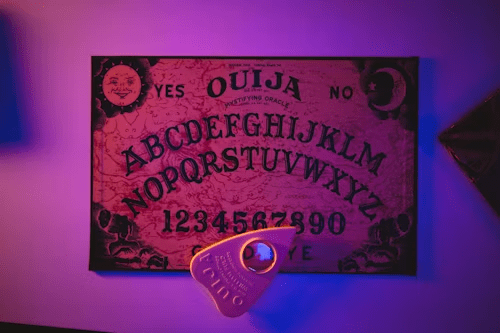
There are a lot of films that use Ouija boards as the main element of their horror, but only a few do this well. Ouija: Origin of Evil is now among my top three favorite ouija-themed horror films, Veronica and I Am Zozo being the other two. Made to be a prequel to the original Ouiji movie, this film came to theaters just two years afterwards in 2016. Directed by Mike Flanagan, this summary of the film was provided by Paramount Pictures:
“In 1967 Los Angeles, widowed mother Alice Zander unwittingly invited authentic evil into her home by adding a new stunt to bolster her seance scam business. When the merciless spirit overtakes her youngest daughter Doris, the small family must confront unthinkable fears to save her and send her possessor back to the other side.”
I’m not quite sure what was meant by “authentic” evil, but overall this is a pretty darn accurate preview of what is to come. The official trailer, on the other hand, I was not a fan of. I feel as though way too much of the movie was given away, especially certain plot twists that were surprising. If the trailer was condensed into just the first minute, it would’ve portrayed the lighthearted feel of the beginning and touch upon the fear that will soon intrude on the characters’ lives.
As this is the first movie review in this series, I’ll include the six horror elements I’ll examine: Unique Antagonist, realism, backstory, suspense, audio cues, and believable protagonist.
Horror Elements
Supernatural subgenres of horror films have a tough time coming up with unique antagonists as so many have already been done. This is probably the weakest element of horror within the entire film. Essentially, there’s a demon invited into a house that possesses a child; I’ve seen at least 100 scary movies with a similar plot line. The “monster” in this is not unique in any way, shape, or form.
Thankfully, the director did an excellent job making the movie seem “real”. Not only does the music, setting, and speech create a feeling of being in the 1960s, but the character’s actions are realistic as well. This is prevalent when the board helped the family find money when they were about to lose their house; it creates a believable reason as to why they accepted this supernatural entity, allowing it fully into their lives.
Another few realistic points I appreciated happened towards the end of the film. Despite wanting to immediately leave the home, the youngest daughter calls for help from downstairs, and, being a close-knit family, they feel it necessary to go after her. Honestly, if there was a demon in my house and I was calling for help from the basement, I know my family would come for me too (not like we’ve discussed this in great length before), so this was highly relatable. In addition to this, the characters agree that splitting up would be a terrible idea, they immediately throw the ouija board in the fire, and the priest mentions he has no idea if burning it will actually work, so nobody should let their guard down. Thank you! Finally, smart characters!
Though I plan on reviewing the first Ouija movie in detail sometime in the near future, I will say that it left quite a few plot holes that this prequel did a satisfactory job filling. It gives a reason for the Ouija board being in the house, the reason for the hidden basement, and a reason for why the three main characters appear the way they do in the other film. Incorporating the post-war story also made the whole plot stronger and feel more realistic.
The music and sound effects, though nothing special, were effective nonetheless. Suspense, on the other hand, was done quite well as the entire first 45 minutes (half the movie) didn’t show the supernatural entity at all, leading to a continual build up of tension. Jump scares were also kept to a minimal level which I respect. Even the initial introduction of the ouija board was done in such a normal, nonchalant way, it developed a sort of “unsettling” feeling that lingered throughout the entire film.
Movie Elements
Though not an original idea (it was a prequel afterall), nor particularly creative, I will cite again the great job done in regards to filling plot holes in from the first movie. I understand this does not encompass the definition of creativity within film; however, I still believe it deserves some credit as it requires imagination and good story telling (both require creativity) in order to accomplish this successfully. Cinematography also did a great job of progressing the plot in the background as a story was unfolding in the foreground.
A great example of this is when the family arrives home to a “Foreclosure” notice on their front door. The mother is sitting on the front steps upset and the older daughter is out there attempting to comfort her. With the front door ajar, you can see the youngest daughter moving around in the background, and although it’s blurry, ends up being a significant factor within the story. This was an excellent storytelling technique as it forces the viewer to pay more attention to the story, all well telling more within the same amount of time.
With no concrete image of the antagonist until 45 minutes into the film, the pacing was also done quite well. As I mentioned earlier, this creates an authentic feeling of suspense. Pair this ominous mood, with the minimal jumpscares, and you have the audience on edge throughout most of the movie as there was no way to release tension until they actually start to fight the demon at the end. To me, this is when things stop being scary, but I understand scary movies like a good final fight scene.
Pacing direct scares did not make the movie boring by any means; it was quite entertaining and I have now watched it multiple times. You can enjoy this movie without having any idea there is a second one, though it is kind of fun to catch the references. The characters are believable and the acting is good. Overall, the change in personality of the little girl is eerily done, starting small with the cursive scene (since when can you write in cursive?) to the more brutal scene of the slingshot (did that kid lose his eye?). This only works because of the initial character development done early on in the film when we are shown how close these three women truly are.
Conclusion
Though it’s not on my “Top Ten” list, I certainly did enjoy Ouija: Origin of Evil. It did an excellent job with foreshadowing and creating a suspenseful mood. My favorite (scariest) scene was when the priest does a reading with the family where he asks the ouija board questions himself. Essentially he “tricks’ ‘ it by thinking incorrect answers so as to prove it was not really his beloved wife he was “speaking” with, but a malevolent force of evil instead. This, to me, was executed so well it still gives me goosebumps when I watch it. I also enjoyed that it was a bit of a “throw back” to the original film where one of the characters attempted the same thing, with similar results.
My biggest complaint with this movie was the ending. It would’ve been acceptably scary if it ended with the older daughter staring at the psychiatrist from within her cell at the mental institution. He had glimpsed two girls in the room as he walked past, double backed, and made creepy, prolonged eye contact with her. It should have just ended right there, but unfortunately it did not. Instead, it ended with a cheap jump scare, showing the demon girl crawling on the ceiling before cutting out. Is it too much to ask for a subtle ending? Does no director believe in the “less is scarier” concept? This was a huge let down for me, contributing to it not being higher on my list of favorite horror movies.
Final Scare Me Please Score: Splitting up sounds like the dumbest thing in the world right now, out of 100
Have you watched this movie? What did you think? Anything we missed? Have an idea for what we should watch next? Drop a comment below to let us know!
 Scare Me Please