Ghost Stories Review

Introduction

Ghost Stories (2017) is a chilling British horror anthology that blends psychological and supernatural terror into a suspenseful, twist-laden film. Directed by Jeremy Dyson and Andy Nyman, the film follows Professor Philip Goodman, a skeptical investigator of paranormal claims, as he examines three disturbing cases that challenge his beliefs. With its eerie atmosphere, unsettling storytelling, and strong performances, Ghost Stories aims to pay homage to classic horror anthologies while offering a fresh take on the genre.

Let me be upfront by saying I am a huge fan of horror movie anthologies—I seem to enjoy them even when they aren’t particularly well-made. There’s something about the structure of interconnected, bite-sized tales of terror that I find irresistible. However, that doesn’t mean I can’t recognize when an anthology falls flat or fails to deliver a satisfying experience. Some rely too heavily on jump scares, while others struggle with pacing or weak wraparound stories. So where does Ghost Stories rank among its peers? Does it deliver a hauntingly memorable experience, or is it just another forgettable entry in the genre? Let’s take a closer look.

Horror Elements

At the beginning of the movie, the true antagonist isn’t immediately clear, as the film presents itself as a straightforward supernatural investigation. Initially, the cases Professor Philip Goodman examines seem to suggest that the ghosts and demons haunting the victims are the primary sources of terror. However, as the film progresses, it becomes evident that the real antagonist is something far more psychological—Goodman himself. His deep-seated guilt and suppressed trauma manifest through the terrifying stories he encounters, leading to a shocking revelation that reframes the entire narrative. The sinister force at play isn’t just the supernatural but the haunting nature of Goodman’s own mind, making Ghost Stories as much a psychological thriller as it is a horror film.  Honestly, I went into this movie not knowing this (the trailer doesn’t give too much away), so I initially thought this was just going to be another supernatural-scares sort of film.  This made the psychological twist so much more powerful at the end.  

Professor Philip Goodman is a highly believable protagonist in Ghost Stories (2017), thanks to both strong writing and Andy Nyman’s nuanced performance. As a skeptic and debunker of the paranormal, Goodman is grounded in logic and reason, making his descent into fear and uncertainty all the more compelling. His reactions to the eerie events he investigates feel natural—initially dismissive, then subtly unnerved, and eventually completely unraveled. Unlike many horror protagonists who make irrational decisions for the sake of scares, Goodman approaches each case methodically, making his transformation into a man questioning his own reality all the more effective.  This slow suspenseful build only adds to the horror. His backstory, which is gradually revealed, adds layers to his character, making him not just a vessel for the audience but a deeply flawed and human figure whose fears are far more psychological than supernatural.

In addition to having a believable protagonist, I also felt as though the different characters’ reactions were uniquely portrayed by their character and realistic.  With the first case to be examined, that of Tony Matthews, his reaction to the supernatural events reflects what his character would actually do:  turn on a happy song up loud, call his co-worker for comfort, pick up a hammer (weapon), and call out a threat to whatever is out in the darkness tormenting him.  Simon Rifkind, the second case study, reacts in a similar fashion in that he attempts to grab a weapon (a rolled up map is better than nothing).  Instead of going into “fight mode” as Matthews did, he instead chooses to run from the car when the monster enters it.  Considering how fragile his character seems, this fits what he’d actually do quite well.  Finally, Mike Priddle, the 3rd and final character, reacts differently as well.  Being an intelligent business man, he approaches paranormal events with a logical approach.  For example, when the baby diapers fly across the floor in the nursery, he checks all the windows for a potential draft.  Again, it fits his character and I appreciate these subtle differences immensely.  

Movie Elements

While many anthologies rely on disconnected short tales with a simple wraparound narrative, Ghost Stories cleverly weaves its segments into a larger, more cohesive mystery that builds toward an unexpected and deeply unsettling conclusion.  Additionally, its willingness to subvert expectations—particularly in how it recontextualizes its supernatural elements—adds a layer of depth rarely seen in traditional anthology horror. Rather than just telling scary stories, the film ultimately explores the nature of fear, guilt, and the fragile state of the human mind, making it a refreshingly original entry in the genre.  

The pacing of Ghost Stories is deliberate, gradually building tension rather than relying on constant scares or action. The film takes its time establishing atmosphere and character, particularly through Professor Philip Goodman’s methodical investigations. Each of the three cases unfolds with a slow, creeping dread, allowing the horror to simmer rather than explode all at once. While this approach effectively heightens suspense, some viewers may find the film’s measured pace a bit too restrained, especially in the first half. However, the steady buildup pays off in the final act, where the narrative accelerates into a surreal, mind-bending climax. The film’s pacing ultimately mirrors its psychological themes—drawing the audience deeper into Goodman’s unraveling reality—making for an experience that is unsettling, if at times intentionally slow-burning.

Acting is one of the film’s strongest aspects, with each performance adding depth and authenticity to the film’s eerie atmosphere. Andy Nyman delivers a compelling lead performance as Professor Philip Goodman, perfectly capturing his character’s skepticism, growing unease, and eventual unraveling. Paul Whitehouse, Alex Lawther, and Martin Freeman each bring something unique to their respective segments.  

Whitehouse portrays a working-class man haunted by a tragic encounter with raw realism.  In fact ,as I was watching his story unfold, I couldn’t help but be reminded of someone I knew exactly like him that I worked with many years back.  Specifically, when the spooky stuff starts to happen to him during his night shift, he kind of blows it off at first, something I felt to be very much, Lawther’s performance as a deeply disturbed teenager is intensely unsettling, and Freeman adds a charismatic yet chilling presence that lingers long after his scenes. The cast’s commitment to their roles makes the supernatural elements feel all the more believable, elevating Ghost Stories beyond a typical horror anthology into something far more psychological and immersive.

Cinematography was yet another aspect of the film that was done well. The camera often lingers on empty spaces, creating a sense of unease and suggesting the presence of something unseen. The use of dim lighting and shadowy compositions heightens the feeling of claustrophobia and uncertainty, with scenes that seem to be on the edge of revealing something terrifying, but never fully expose it until the right moment. The framing is precise, often focusing on the protagonist’s reactions or the subtle movement in the background, adding to the unease. Particularly effective are the moments when the camera holds on still shots, allowing the audience to linger in the discomfort of a scene, with every shadow or flicker of light amplifying the growing sense of dread. One specific example of this is during a scene with the character Tony Matthews.  After exploring the far end of the basement level of his building and discovering nothing amiss, he tries to calm his nerves by smoking a cigarette.  In the background, the audience can see the lights in the hallway behind him turn off one by one; this was incredibly effective.  

Conclusion

Overall, Ghost Stories is a meticulously crafted horror anthology that blends supernatural chills with psychological depth, offering a uniquely unsettling experience. With strong performances, a slow-burning but effective pace, and masterful use of cinematography and sound design, the film builds an eerie, immersive atmosphere that almost requires a second viewing. While its deliberate pacing and layered storytelling may not appeal to all horror fans, those who appreciate psychological horror and well-executed suspense will find plenty to admire.  As I’ve mentioned in other articles, I have ADHD.  With this in mind, when I say that this movie captured my full interest, it means it was extremely interesting.  I like to take notes during both my viewings of the movies I review, and with this one I actually had to pause it so I could jot stuff down as I didn’t want to miss a single second.  More than just a collection of ghostly encounters, Ghost Stories is a chilling exploration of guilt, fear, and the blurred lines between reality and the mind’s darkest corners.

Final Scare Me Please Score:  Coma from hell, out of 100

Link To Official Trailer

Have you watched this movie?  What did you think of it?   Did you guess the ending? Which was the scariest story to you?  Anything we missed? Have an idea for what we should watch next? Drop a comment below to let us know!
Lit up house with a pool

Suspense and Horror: Why Aftermath Stands Out

Lit up house with a pool

Introduction

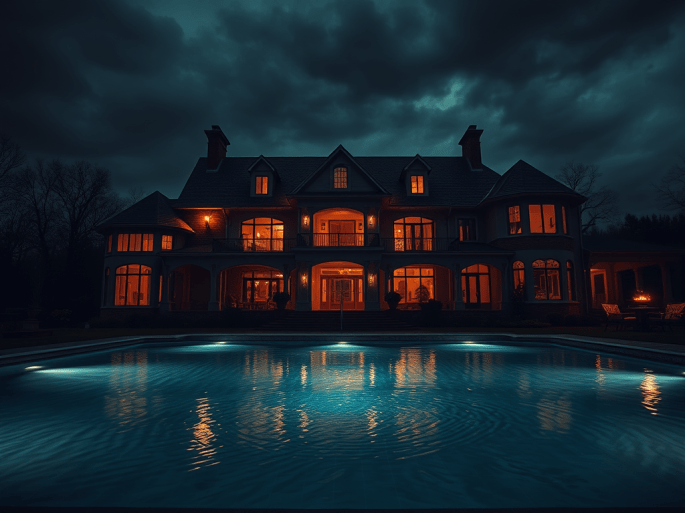
Imagine after months of saving and searching, you’re finally moving into your new dream home.  After haggling with the owners, you manage to knock down the price into a range that you can afford.  You never imagined being able to live in such an upscale house you are ecstatic when the paperwork goes through.  There is some dark history behind the house, but that’s easy to ignore when you jump into the swimming pool, your swimming pool.  Does this sound ideal?  It certainly did to the main characters in the movie Aftermath, a film directed by Peter Winther that was released in 2021.

Just like the theatrical trailer, the film summary provided on Netflix, where I watched the movie, is vague as to what exactly is going to unfold within the story:

“Desperate to save their marriage, a young couple takes a deal and moves into their dream home, but disturbing events reveal the house’s troubled history.”

I very much appreciate when trailers do not give away too much about the film and this one certainly did not.  It was difficult to classify what type of horror this film was as there’s a bit of a twist to it, but ultimately I’d classify it a mixture of mystery/thriller/horror.  

Horror Elements

Based on a true story (which I’ll delve into later), the movie has a captivating introduction of a 9-1-1 call and an unfolding of a crime scene.  This will play a role later on, but for the introduction it provides backstory that sets the stage for the rest of the plot to play out.  Why was the couple able to move into a house that is well out of their price range and yet once the paperwork is done they feel stuck there?  Well, because of the murder/suicide that took place there, that’s why.  

The two antagonists in the film were nothing special; certainly creepy, but not particularly scary once you actually know what’s going on in the story.  Personally, the idea of somebody being that devious and taking away your feeling of safety within your own home was far scarier then when the main characters finally saw the flesh-and-blood person in their home.    

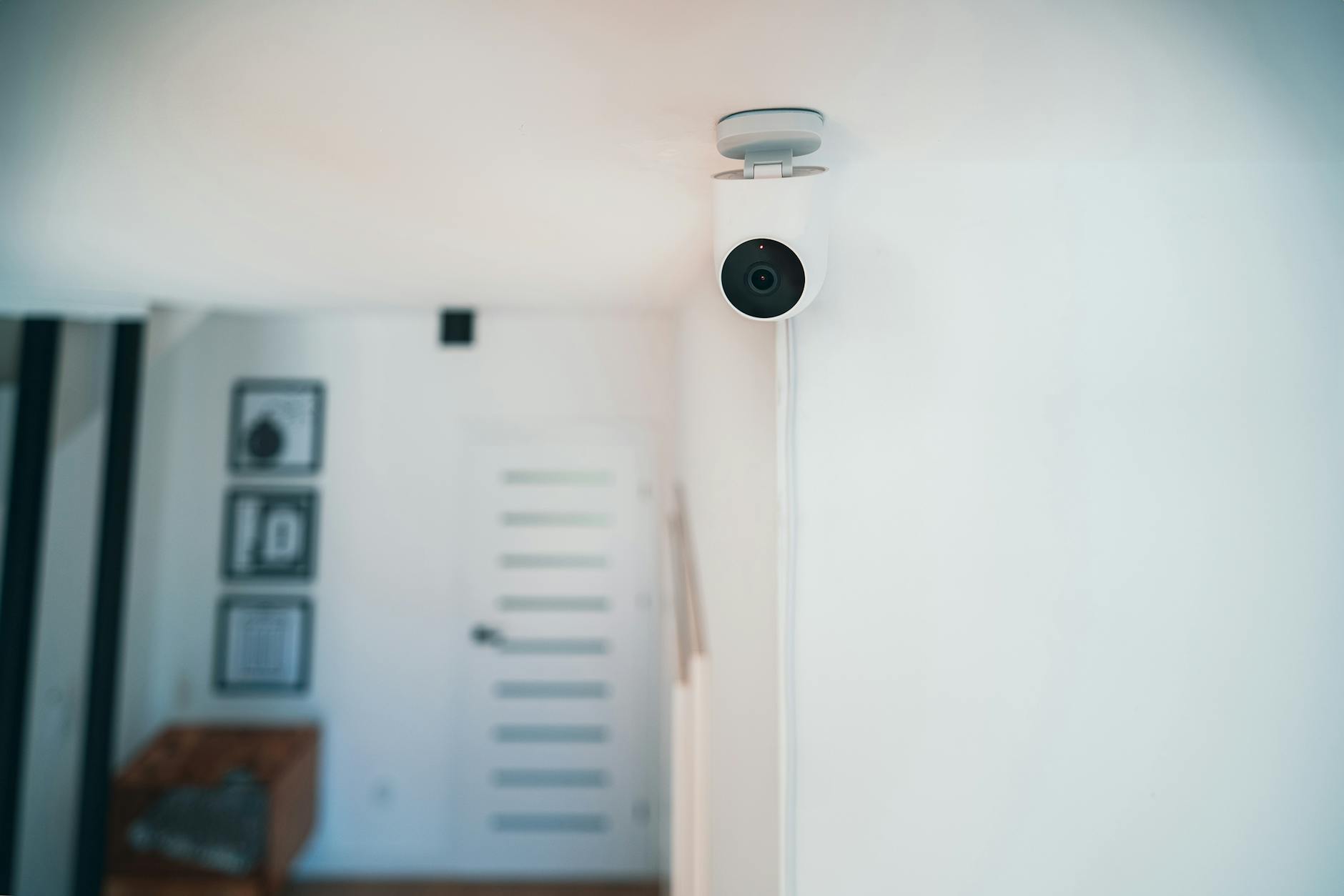
With a lot of the plot being based on a true story, the whole movie felt a lot more “real” than most.  Add great acting, well-developed characters, likable protagonists, and boom- you have a sturdy base for your horror movie to stand on.  Something I wrote multiple times in my notes while watching was “FINALLY SMART CHARACTERS”.  What do I mean by this?  To start, whenever the wife heard a scary noise or saw something spooky, she immediately grabbed a weapon and/or called the police.  None of this “is somebody there?” nonsense you typically see in movies.  Also, the main character was relentless in proving there was something wrong with the house by investing in security cameras and hiding a secret camcorder in her bedroom, an action that eventually leads to the antagonist being caught.  

Photo by Jakub Zerdzicki on Pexels.com

One of my favorite lines from the movie, and one I feel to be extremely realistic, takes place right after the couple wake up in the middle of the night to a loud noise.  Hearing footsteps downstairs, the husband bolts out of the room, leaving his wife alone.  Instead of waiting for him to return, like I’ve seen in countless other movie scenes, she yells, “Kevin don’t f*cking leave me up here!” before running out of the room to follow him.  She also made sure to stab the killer again even after he was presumed dead, just to make sure- thank you! 

 Music and audio cues for each scene are executed extremely well, including the jump scares, in which there were only three in the entire movie, one of which made me scream so loud I got a sore throat.  Suspense, however, is what sets this movie apart from others.  There’s no clear look at the “monster” until the final climax scene which occurs during the last 15 minutes of the film.  Instead, the audience has a full 1:45 minutes of complete dread to sit through until it can finally be released through the final fight scene.  In fact, this tension got high for me, I actually had to pause the movie at about 45 minutes in, to just breathe and let my heart rate return to normal.  

Movie Elements

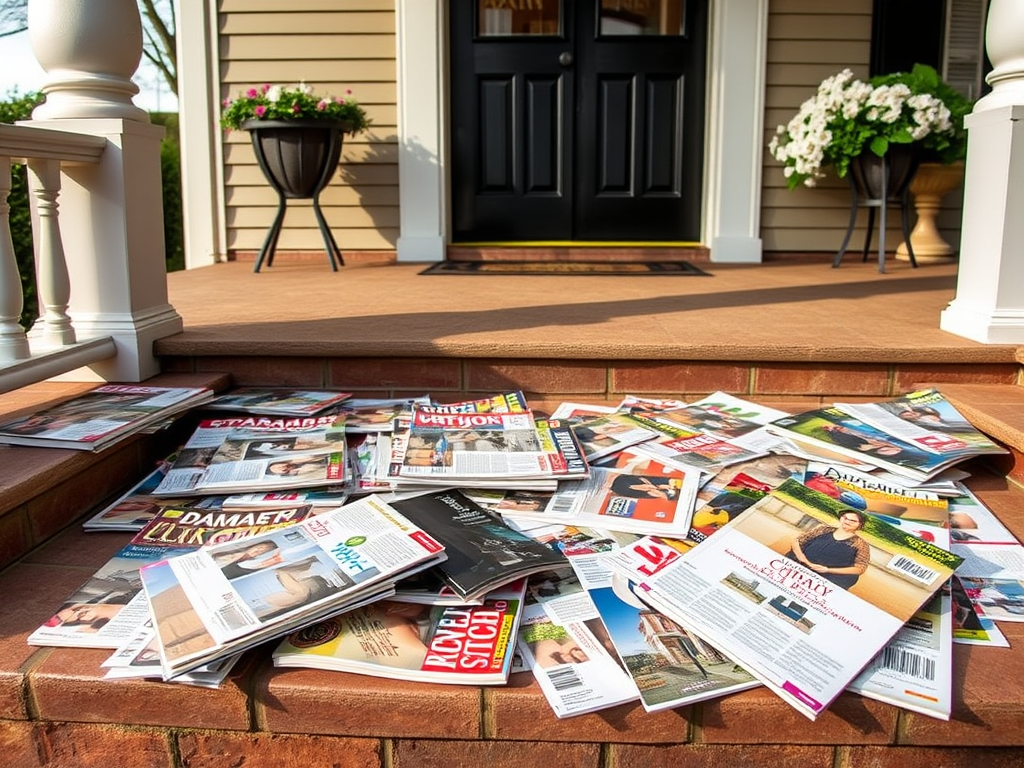
Though I felt the movie creatively added certain horror elements to an already scary situation, I can’t give the filmmakers full credit for originality considering it’s based on the true story of a young couple from California.  Basically, a young couple ended up outbidding someone on an amazing house in Carmel Valley, CA.  After moving in around November, weird things started happening.   The wife began to receive flowers with creepy notes, their mail kept getting stopped, and hundreds of dollars worth of magazine subscriptions were delivered in their names.  

Things escalated around Valentine’s Day, when eight irate neighbors descended upon the husband; all the wives in the neighborhood received inappropriate gifts that had the young couple’s address/the husband’s name on it.  Finally, things reached their peak when multiple strangers dropped by the home attempting to rape the wife.  It was then discovered an ad had been put in the paper advertising the address with a picture of the wife, inviting men into her home.  It was shortly after this discovery was made that the police arrested Kathy Rowe, the person whom the couple had originally outbid on the house.  

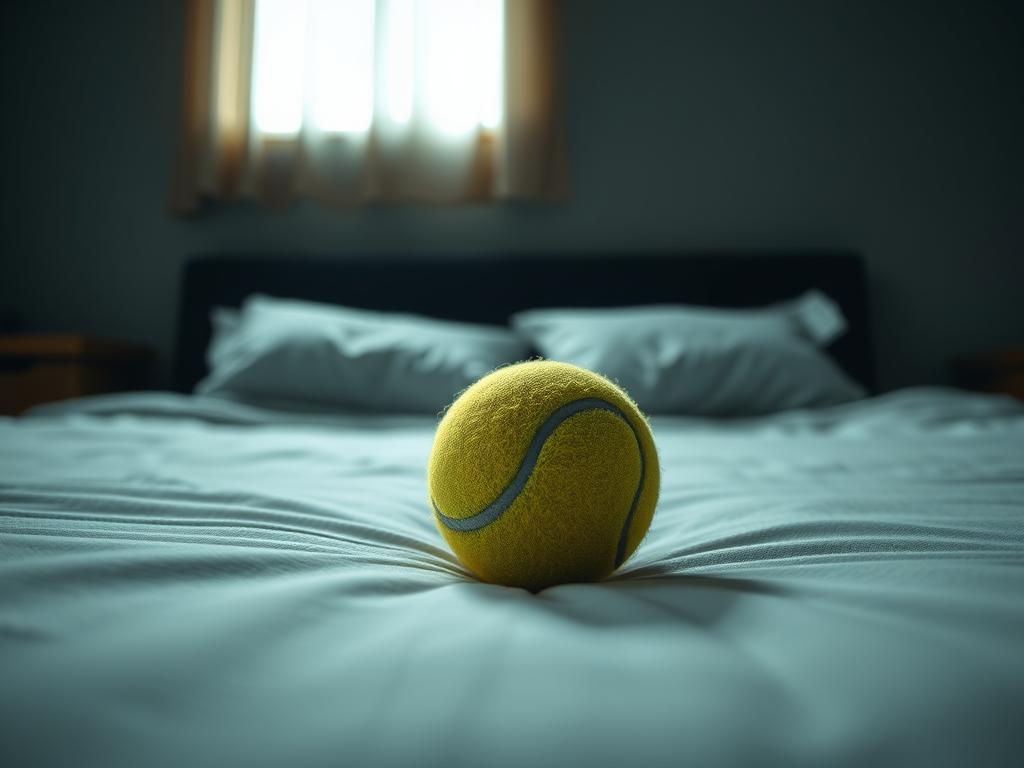
All of this was included within the movie, (in addition to a few twists and additions) which to me, made everything a bit scarier knowing it had been a real story.  The pacing was great and kept my interest the entire two hours, quite a feat considering I have ADHD.  I will say there was a bit too much drama for my taste, but despite this, the movie was still quite entertaining.  I’m not quite sure where to mention this, but I have to acknowledge how much the dog Odie added to the movie too.  There were quite a few scenes (at least five) that were made scary only because of the dog.  For example, at one point the wife is playing fetch with the pupper when the ball rolls under her bed, getting stuck.  She leaves the room (he follows her) to retrieve something long to get the ball unstuck.  When she returns a few moments later, the ball is sitting on top of her bed.  No change in music, no image of the antagonist, nothing dramatic whatsoever, yet it produced the desired effect:  fear.  Fear is at its peak during horror scenes when the director understands and allows the audience’s imagination to take over in place of “special effects”.

Cinematography, though not elaborate, was great, with the entire set feeling “dark”.  Lighting was not an issue either, as despite the gloom, the audience could still see everything going on.  For some scenes, there was a “fisheye” effect used, which at first I thought would be distracting, but ending up making the scene more intense as it hyper focuses on the main character in the middle of the screen, allowing for the edges of the lense to appear stretched, distorted, making anything (or anyone) you see to appear way creepier than normal.  I have seen this done in other films before in such a way that was distracting, I believe because there was too much of the effect, too dramatically done, whereas the effects and angles in this film were subtle.   

Conclusion

After looking around the internet for other reviews, I was discouraged to see Aftermath didn’t seem to do too well.  Though not an award winner by any means, I still feel it should get more credit than it did and is certainly one I would recommend watching.  It did an excellent job building up a thick layer of suspense for the audience, making it an excellent choice for mystery/thriller fans.  This movie did a lot right, but one major critique would be the “why” behind the old lover living under the stairs.  During the final 15 minutes, there was a flashback in conversation that went into it slightly, but there were no details, and the final explanation during the end scene felt rushed at best.  Again the audience has to make some of their own inferences, which is fine,  but certainly it could have been a bit smoother.  All in all, a worthy watch and one that isn’t diminished when rewatched either.  

Final Scare Me Please Score: Just padlock the door under the stairs shut, out of 100

Photo by Pixabay on Pexels.com

Have you watched this movie? What did you think? Anything we missed? Have an idea for what we should watch next? Drop a comment below to let us know!
Official Trailer

Sources:

San Diego couple still scared after a year of torment from jealous home   bidder. ABC7 Los Angeles. (2015, February 13). Retrieved March 30, 2023, from https://abc7.com/rape-san-diego-kathy-rowe-jerry-rice/475504/ 

Wikimedia Foundation. (2023, March 23). Aftermath (2021 film). Wikipedia. Retrieved March 30, 2023, from https://en.wikipedia.org/wiki/Aftermath_(2021_film) 

Ouija : Origin of Evil Review

Introduction

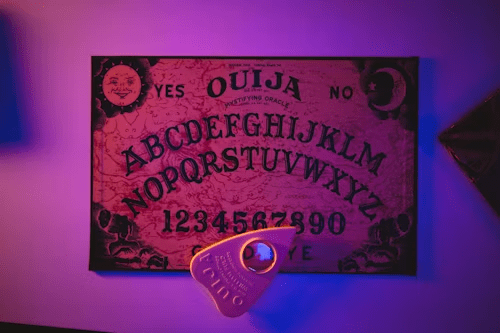
There are a lot of films that use Ouija boards as the main element of their horror, but only a few do this well.  Ouija:  Origin of Evil is now among my top three favorite ouija-themed horror films, Veronica and I Am Zozo being the other two.  Made to be a prequel to the original Ouiji movie, this film came to theaters just two years afterwards in 2016.  Directed by Mike Flanagan, this summary of the film was provided by Paramount Pictures:

“In 1967 Los Angeles, widowed mother Alice Zander unwittingly invited authentic evil into her home by adding a new stunt to bolster her seance scam business.  When the merciless spirit overtakes her youngest daughter Doris, the small family must confront unthinkable fears to save her and send her possessor back to the other side.”

I’m not quite sure what was meant by “authentic” evil, but overall this is a pretty darn accurate preview of what is to come.  The official trailer, on the other hand, I was not a fan of.  I feel as though way too much of the movie was given away, especially certain plot twists that were surprising.  If the trailer was condensed into just the first minute, it would’ve portrayed the lighthearted feel of the beginning and touch upon the fear that will soon intrude on the characters’ lives. 

As this is the first movie review in this series, I’ll include the six horror elements I’ll examine:  Unique Antagonist, realism, backstory, suspense, audio cues, and believable protagonist.  

Horror Elements

Supernatural subgenres of horror films have a tough time coming up with unique antagonists as so many have already been done.  This is probably the weakest element of horror within the entire film.  Essentially, there’s a demon invited into a house that possesses a child; I’ve seen at least 100 scary movies with a similar plot line.  The “monster” in this is not unique in any way, shape, or form.  

Thankfully, the director did an excellent job making the movie seem “real”.  Not only does the music, setting, and speech create a feeling of being in the 1960s, but the character’s actions are realistic as well.  This is prevalent when the board helped the family find money when they were about to lose their house; it creates a believable reason as to why they accepted this supernatural entity, allowing it fully into their lives. 

Another few realistic points I appreciated happened towards the end of the film. Despite wanting to immediately leave the home, the youngest daughter calls for help from downstairs, and, being a close-knit family, they feel it necessary to go after her.  Honestly, if there was a demon in my house and I was calling for help from the basement, I know my family would come for me too (not like we’ve discussed this in great length before), so this was highly relatable.  In addition to this, the characters agree that splitting up would be a terrible idea, they immediately throw the ouija board in the fire, and the priest mentions he has no idea if burning it will actually work, so nobody should let their guard down.  Thank you!  Finally, smart characters!

Though I plan on reviewing the first Ouija movie in detail sometime in the near future, I will say that it left quite a few plot holes that this prequel did a satisfactory job filling.  It gives a reason for the Ouija board being in the house, the reason for the hidden basement, and a reason for why the three main characters appear the way they do in the other film.  Incorporating the post-war story also made the whole plot stronger and feel more realistic.  

The music and sound effects, though nothing special, were effective nonetheless.  Suspense, on the other hand, was done quite well as the entire first 45 minutes (half the movie) didn’t show the supernatural entity at all, leading to a continual build up of tension.  Jump scares were also kept to a minimal level which I respect.  Even the initial introduction of the ouija board was done in such a normal, nonchalant way, it developed a sort of “unsettling” feeling that lingered throughout the entire film.   

Movie Elements

Though not an original idea (it was a prequel afterall), nor particularly creative, I will cite again the great job done in regards to filling plot holes in from the first movie.  I understand this does not encompass the definition of creativity within film; however, I still believe it deserves some credit as it requires imagination and good story telling (both require creativity) in order to accomplish this successfully.  Cinematography also did a great job of progressing the plot in the background as a story was unfolding in the foreground.  

A great example of this is when the family arrives home to a “Foreclosure” notice on their front door.  The mother is sitting on the front steps upset and the older daughter is out there attempting to comfort her.  With the front door ajar, you can see the youngest daughter moving around in the background, and although it’s blurry, ends up being a significant factor within the story.  This was an excellent storytelling technique as it forces the viewer to pay more attention to the story, all well telling more within the same amount of time.  

With no concrete image of the antagonist until 45 minutes into the film, the pacing was also done quite well.  As I mentioned earlier, this creates an authentic feeling of suspense.  Pair this ominous mood, with the minimal jumpscares, and you have the audience on edge throughout most of the movie as there was no way to release tension until they actually start to fight the demon at the end.  To me, this is when things stop being scary, but I understand scary movies like a good final fight scene.   

Pacing direct scares did not make the movie boring by any means; it was quite entertaining and I have now watched it multiple times.  You can enjoy this movie without having any idea there is a second one, though it is kind of fun to catch the references.  The characters are believable and the acting is good.  Overall, the change in personality of the little girl is eerily done, starting small with the cursive scene (since when can you write in cursive?) to the more brutal scene of the slingshot (did that kid lose his eye?).  This only works because of the initial character development done early on in the film when we are shown how close these three women truly are.

Conclusion

Though it’s not on my “Top Ten” list, I certainly did enjoy Ouija: Origin of Evil.  It did an excellent job with foreshadowing and creating a suspenseful mood.  My favorite (scariest) scene was when the priest does a reading with the family where he asks the ouija board questions himself.  Essentially he “tricks’ ‘ it by thinking incorrect answers so as to prove it was not really his beloved wife he was “speaking” with, but a malevolent force of evil instead.  This, to me, was executed so well it still gives me goosebumps when I watch it.  I also enjoyed that it was a bit of a “throw back” to the original film where one of the characters attempted the same thing, with similar results.    

My biggest complaint with this movie was the ending.  It would’ve been acceptably scary if it ended with the older daughter staring at the psychiatrist from within her cell at the mental institution.  He had glimpsed two girls in the room as he walked past, double backed, and made creepy, prolonged eye contact with her.  It should have just ended right there, but unfortunately it did not.  Instead, it ended with a cheap jump scare, showing the demon girl crawling on the ceiling before cutting out.    Is it too much to ask for a subtle ending?  Does no director believe in the “less is scarier” concept?  This was a huge let down for me, contributing to it not being higher on my list of favorite horror movies.  

Final Scare Me Please Score:  Splitting up sounds like the dumbest thing in the world right now, out of 100

Have you watched this movie? What did you think? Anything we missed? Have an idea for what we should watch next? Drop a comment below to let us know!